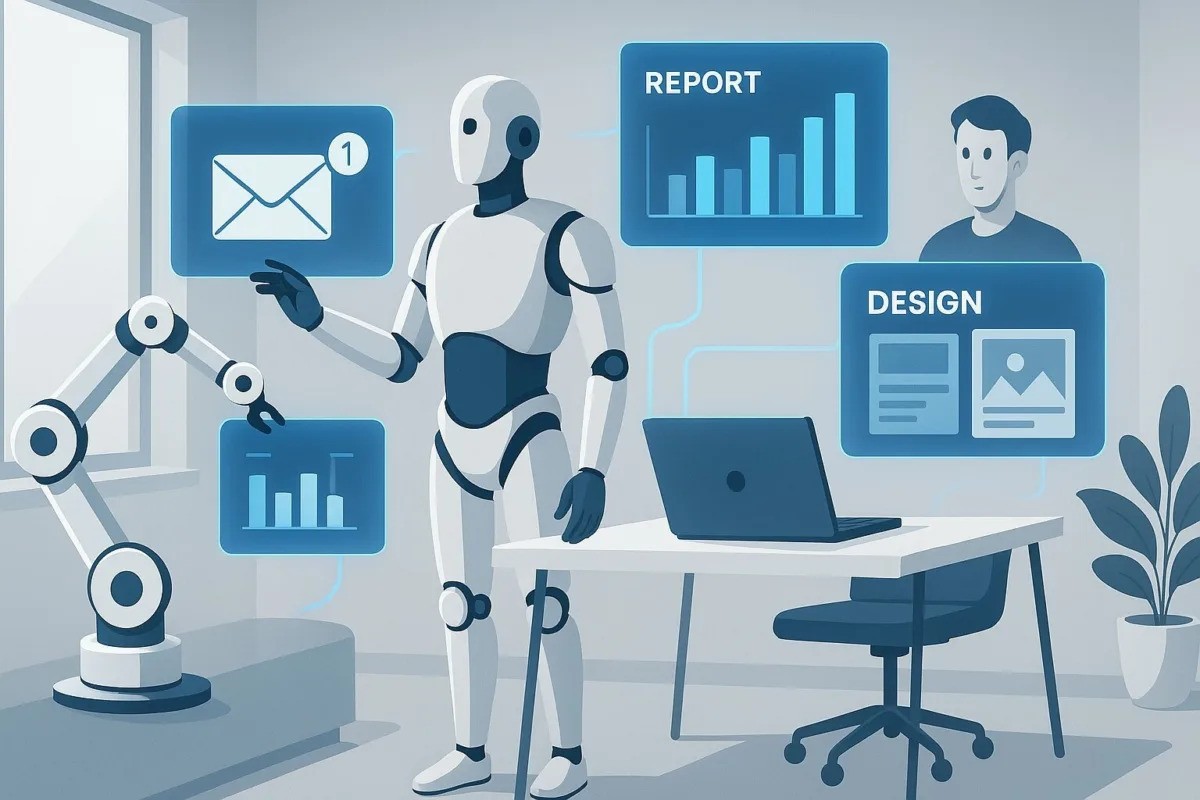
Artificial Intelligence is no longer just a buzzword—it’s a powerful tool that’s reshaping industries. Among the most impactful applications are AI agents—autonomous systems capable of analyzing data, making decisions, and performing tasks independently. These intelligent systems are revolutionizing how businesses operate, offering efficiency and scalability that were unimaginable a decade ago.
AI agents are widely used in customer service, where chatbots handle queries instantly, reducing the need for human intervention. In business analytics, they process large amounts of data to provide insights for faster decision-making. Industries like healthcare, finance, and logistics are also adopting AI agents to automate repetitive processes, streamline workflows, and improve accuracy.
One of the greatest benefits of AI agents is their ability to adapt. Unlike traditional software, these systems learn from experience and adjust to new situations. This makes them ideal for tasks that require problem-solving and flexibility, such as personalized recommendations in e-commerce or predictive maintenance in manufacturing.
“The purpose of AI is not to replace humans, but to amplify human potential.” – Satya Nadella
However, with this advancement comes the challenge of integrating AI with human roles. Many worry that automation will replace jobs, but the reality is more nuanced. AI agents are best viewed as collaborators—handling repetitive tasks so humans can focus on creativity, strategy, and innovation. The future of work will likely involve humans and AI agents working side by side. Professionals who understand how to harness the power of AI will be in high demand. By embracing these technologies, businesses and individuals can unlock greater efficiency and competitive advantage in the digital era.